Many of the same principles of growing in-ground tomatoes apply when you are growing tomatoes in containers. However, there are a few key differences and unique challenges you will encounter when caring for container tomatoes.
If you’re planning to grow tomatoes in containers this year and want to avoid some of the most common mistakes home gardeners make, it’s important to get these four things right:
- Choose the right tomatoes for container growing.
- Use large enough containers.
- Provide your tomatoes with adequate and consistent water.
- Prevent your tomatoes - and their containers - from falling over.
If you’re more interested in learning the basics of growing tomatoes in-ground than in containers, head over to this beginner’s guide to tomatoes.
Choose the Right Tomatoes for Container Growing
It’s true that almost any tomato can be grown in a container. But some tomato types and varieties are well-suited to container growing and others require a lot of extra time and effort from the gardener if they’re going to thrive in the small space of a container.
If it’s your first year growing tomatoes, if you have a very small space or if you can’t devote a lot of time to tomato care over the growing season, I suggest sticking with tomato varieties that are well-suited to small-space and container gardening. It will make your life easier.
In general, the best tomato varieties for containers are those that are relatively short and compact in size with smaller fruit and fewer days to maturity. These have smaller root systems that won’t be hindered by the container and they won’t need to rely on the limited resources of the container soil for as long as varieties with larger fruit and more plant material would.
Look for small determinate varieties of cherry, grape, paste, and smaller slicers that grow no more than 3 or 4 feet tall as well as container-specific, dwarf or micro varieties.
.jpg)
Determinate Tomatoes: The Easiest Option for Containers
Determinate tomatoes grow only to a predetermined size, usually 2 ½-4 feet tall, and have a bush-like growth habit rather than a long trailing vine. They set all their fruit at once which can be harvested within a 2-3 week window and then they are done for the season.
Determinate tomatoes take up less space and are easier to manage as the growing season progresses - particularly varieties that have been bred for containers or patios. They don’t need pruning and will stay upright with a simple stake or cage so they are less work for the gardener.
Choosing the right tomato varieties for you and your garden is an important task that can be both exciting and overwhelming. If you’re just getting started with vegetable gardening, check out my detailed guide to choosing your tomato varieties.
At the same time, determinate tomatoes have some disadvantages.
- There are far fewer determinate varieties than indeterminate varieties, which limits the options of size, shape and color of tomatoes available to the container gardener.
- Whether heirloom or hybrid, determinants tend to be bred for their productivity, early ripening and compact size, rather than for taste or aesthetics. You won’t get the best flavors or the most interesting tomatoes available if you only grow determinate varieties.
- If it’s a big harvest you’re after, you’ll need to grow a lot of determinate tomatoes, which means you’ll need a lot of containers.
Indeterminate Tomatoes: A Challenge for Container Growing
Indeterminate tomatoes are large plants with vine-like growth habits that can reach 7’ or more over the growing season. Most tomato varieties, including the large beefsteak types, are indeterminate. Their sprawling growth habit makes them poorly-suited to container growing.
However, if you have your heart set on growing particular tomato varieties that happen to be indeterminate, you can grow them in pots if you’re up for the challenge. You will need to:
- Use very large containers. You will need at least 15 quart pots, grow bags or wooden planters, but 20-25 quarts is ideal.
- Set up a large and sturdy support system at planting time or soon after. Either a sturdy stake and/or a large cage or trellis. Ideally, find a way to attach the stake or trellis you use to some permanent structure like the side of a patio, wall or fence to prevent the container from falling over late in the season.
- Commit to regular maintenance of your tomatoes. Large tomato plants in containers need daily watering and weekly fertilizing and pruning or training up a support system. You will need to regularly prune at least some of the suckers off your indeterminate tomato plants or they will take over your space.
.jpg)
If it’s large beefsteak tomatoes you want and you’re growing in containers, I suggest opting for dwarf plant varieties with full-sized beefsteak fruits rather than indeterminate beefsteak varieties.
Dwarf Tomatoes: A great option for containers
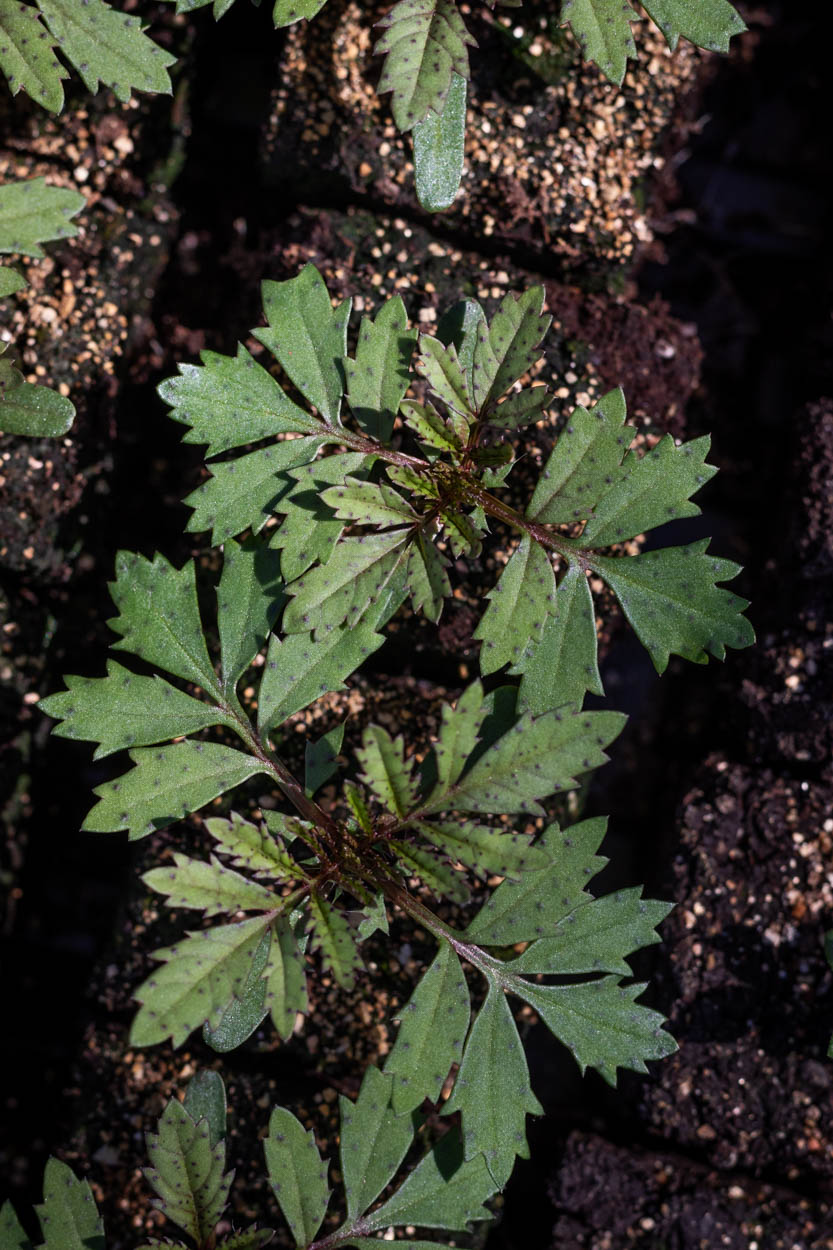
Dwarf tomatoes aren’t just miniature-tomatoes. They are a different sort of plant altogether that can be considered a third category alongside determinate and indeterminate. They are sturdy, stocky plants with dense foliage that is thick, dark green and has a somewhat ruffled texture referred to as “rugose.”
Dwarf tomatoes have the compact size and bush-like growth habit of determinate varieties but their fruit does not ripen all at once, more like an indeterminate variety, and they come in a wide range of sizes, colors and shapes. Dwarf varieties were specifically bred for characteristics like flavor and color to allow home gardeners to grow tomatoes for flavor and aesthetics while saving space.
Though the yield from each individual dwarf plant isn't as high as that of the average indeterminate plant, because of their size and shape you can pack a lot more of them into a small gardening space without having to use enormous pots and extensive supports.
When choosing dwarf tomato varieties to grow in pots, keep in mind:
- While some dwarf tomatoes are tiny, others can grow up to 3 or 4 feet tall. Check the variety information on the seed packet or online to be sure you are getting the plant size you want.
- Many dwarf tomato varieties are smaller, stout plants but with full-sized and even beefsteak-type tomatoes that can be grown in containers but will still require a long season and lots of water and fertilizer.
Growing your tomatoes from seed is more work but gives you a much wider range of compact or dwarf varieties of tomatoes to grow in containers. If you’re up for the challenge, check out my beginners guide to seed starting.
Use Large Enough Containers
Perhaps the most important thing you can do to ensure success when growing tomatoes in containers is to choose a large-enough container. In general, for tomatoes, the bigger the container the better.
In part, a large container is necessary because tomatoes have extensive root systems that need a lot of water and nutrients to produce a large healthy tomato harvest. These root systems need enough space to grow.
But large containers are also important for growing tomatoes because they make it easier to maintain a consistent level of moisture around your tomatoes over the growing season. Small containers dry out quickly and may need watering several times a day in the heat of summer.
.jpg)
It’s very easy to forget or get too busy to water your tomatoes at some point during the growing season and even short periods of drying out can over-stress and stunt tomato plants. Large containers provide somewhat of an insurance policy for those times you may unintentionally neglect your plants because they hold more water.
The smaller the pot the more frequently you will need to water your tomatoes and therefore the more attention and maintenance that plant will require.
To ensure you are using large enough containers for your tomatoes:
- Plant only one tomato per container.
- Micro tomatoes will be fine in very small pots. However, they will need frequent watering.
- You can get away with using a 5 gallon container for very small determinate patio or micro varieties, but for most determinate tomatoes it’s best to use at least a 10 or 15 gallon pot.
- If growing an indeterminate tomato you will need at least a 15 or 20 gallon container, but it’s better to go with the biggest container you can.
Provide your Tomatoes with Adequate and Consistent Water.
Provide Adequate Water
Tomatoes need a lot of water to thrive. When grown in-ground, they need about 1” of water per week. It’s better to apply this water deeply and less frequently over one or two waterings per week, rather than a little bit of water each day. This encourages their roots to grow further down into the soil to take up the moisture.
You need a different watering strategy when growing tomatoes in containers. Because the volume of soil in a container will not hold the total amount of water a tomato plant needs in a week, you need to focus instead on making sure the soil in the container remains consistently moist, but not soggy, and never dries out completely for the duration of the growing season.
While you may be able to water in-ground tomatoes once a week and forget about them, tomatoes grown in containers need much more attention if they’re going to get enough water. Start by watering your tomatoes well at planting time until the water runs out the bottom of the container. Keep an eye on the containers and water them again when the top inch of soil is dry.
.jpg)
Maintain Consistent Moisture in your Containers
Maintaining a consistent level of moisture in the soil around your tomatoes is just as important as giving them the right amount of water. You don’t want the soil in your containers to oscillate between very wet and very dry.
Inconsistent moisture can cause a lot of problems for your tomato plants including blossom end rot and cracking. Container-grown tomatoes are more susceptible to these problems because it is much more challenging to keep the small volume of soil inside a container consistently moist for the duration of a growing season than it is to do the same for raised or in-ground beds.
If watering your tomatoes twice a day sounds like too much maintenance, consider drip irrigation or, if you have the space, grow them in the ground or in raised beds instead.
To keep your container tomatoes consistently moist throughout the growing season:
- Top your containers with mulch - like compost, straw or dried grass clippings - to help prevent the water from evaporating.
- Get your tomatoes on a watering schedule and stick to it. Adjust the schedule according to the weather - watering less when you get a lot of water and increasing the watering frequency during dry spells.
- Use a rain gauge to help monitor how much rain you receive in a week and adjust the amount you give your tomatoes accordingly.
- Keep an eye on the weather. If it’s been relatively dry and you are expecting a big rain, consider harvesting any tomatoes that are nearly ripe, to avoid cracking.
Make it Easier to Water your Container Tomatoes
Growing tomatoes in containers undoubtedly requires more regular attention and effort than growing tomatoes in raised or in-ground beds. You can try making the process easier by either setting up drip irrigation or using self-watering containers.
Drip Irrigation
Particularly if you plan to grow a lot of tomatoes in containers or grow bags, installing drip irrigation and setting it up on a timer to automate the watering process is a great idea. Drip saves you from having to go outside every day, or twice a day, to water your containers and it solves the problem of how to keep your tomatoes alive when you are traveling or away from home for more than a day or two.
The downsides to drip irrigation are, of course, the cost of the materials and the process of figuring out how to install it and get it working. And, it might not be a great solution if your tomatoes are located on a driveway or other location far from the water source on your property.
But, if you have the budget and some DIY skills, drip irrigation is well worth the time savings.
Self-Watering Containers
Self-watering containers have built-in water reservoirs that allow you to store more water than your tomato plants need at one time without drowning your plants. As the soil in the pot itself dries out, the extra water from the reservoir is wicked up for the plant to use. This cuts down on the frequency with which you will need to manually water your tomato plants.
.jpg)
Once again cost is a big downside of using self-watering containers as buying enough for a large tomato harvest may be cost-prohibitive. Additionally, self-watering containers may be better suited for container gardens in hot dry areas, as it may be easy to over-water your self-watering containers if you live in an area that gets a lot of rain.
However, self-watering containers may be a good time-saving investment if they’re in your budget or you only plan to grow a few tomatoes.
Benefits of Daily Hand-Watering.
Watering your tomatoes daily is a lot of work. At the same time, going out into your garden to look around every day is a valuable practice for any gardener, especially beginners. In my first few years of vegetable gardening I learned so much about how plants grow, plant diseases, and good and bad bugs - simply because I was there to see it all happen.
Caring for your tomato plants everyday gives you the opportunity to regularly monitor them for signs of disease, environmental stress or pests, complete any pruning and training that is necessary and harvest your tomatoes as soon as they are ready.
Prevent your tomatoes - and their containers - from falling over
Almost all tomato plants will need some type of physical support to keep them upright. While you may sometimes get away with leaving smaller tomato plants unsupported, even medium-sized tomato plants that remain upright on their own for most of the season can topple over once they are heavy with full-sized fruit.
The best time to place your supports for your tomatoes is before or immediately after planting. If you wait too long you may end up piercing the plant’s roots.
Stakes
Stakes are one of the simplest ways to support tomato plants and they work well with containers. You can use stakes made of metal, bamboo, wood, plastic or even foraged branches.
Bury the stake a few inches away from the tomato seedling at planting time. Secure the tomato to the stake with a soft or stretchy material like jute or tomato tape. Keep the string relatively loose around the stem of the tomato plant so it can continue to move and grow. Continue to secure the main stem of the tomato plant to the stake every 6 inches or so as the plant grows.
Cages
.jpg)
Tomato cages provide a bit more support than single stakes and, when using them, you won’t need to tie up your tomatoes as they grow. As the plant grows, watch out for large branches that get caught inside the cage or tomatoes that become pressed against the wires of the cage. This can cause splitting or damage to the fruit as you attempt to harvest it.
For cages you can use:
- Inexpensive cone-shaped wire “tomato cages” are easily found at big box stores and garden centers but are too small and flimsy for most tomatoes. They may work for small dwarf varieties, determinate cherry tomatoes and small slicers that won’t get much bigger than 2 ½ feet.
- Various Larger and sturdier rectangular or cylindrical cages are available at garden supply stores. They are more expensive but are better suited to taming tomato plants than the flimsy wire cones. They’ll last many seasons and may collapse for flat storage.
- Alternatively, you could make your own cages with hog panels or even foraged branches. It’s a cost effective and attractive option but you’ll need craftiness, extra time and effort and storage space when the growing season is over.
Keep your Containers from falling over
Not only do you want your tomato plants to remain upright, but you want the containers themselves to remain upright. Choosing large containers and keeping them consistently moist helps with keeping them from falling over by making sure the container is heavy.
But, if you’re growing large tomato plants or if your growing area can get windy, you also may need to get creative about where you position your pots and stakes and leverage the sturdiness of the objects around your growing area to make sure late-season winds don’t take out your pots. If you do this, you may want to position the tomato stake more towards the edge of the container than the middle.
- If possible, position your pots in an area protected from strong winds or against a wall or existing structure around your growing area. Slide the pots next to the wall and, if possible, attach a trellis to the wall itself and tie your tomato plant to that trellis as it grows.
- If growing on a balcony or patio, use the rails of the balcony or patio itself to secure your stakes or tomato cages by tying them together.
- If your containers will sit on a driveway, lawn or other in-ground space. You can drive an additional stake into the ground next to the container and secure it to the stake inside the tomato container.
.svg)

.jpg)